02 Jul Official Rules of Arm Wrestling Explained in Under 3 Minutes
Think arm wrestling is just grabbing hands and going at it? Think again. Professional arm wrestling has official rules that separate bar-room bragging rights from legitimate competition. Whether you're prepping for your first tournament or just curious about how the pros do it, here's everything you need to know about arm wrestling rules, fast.
The Setup: Getting Into Position
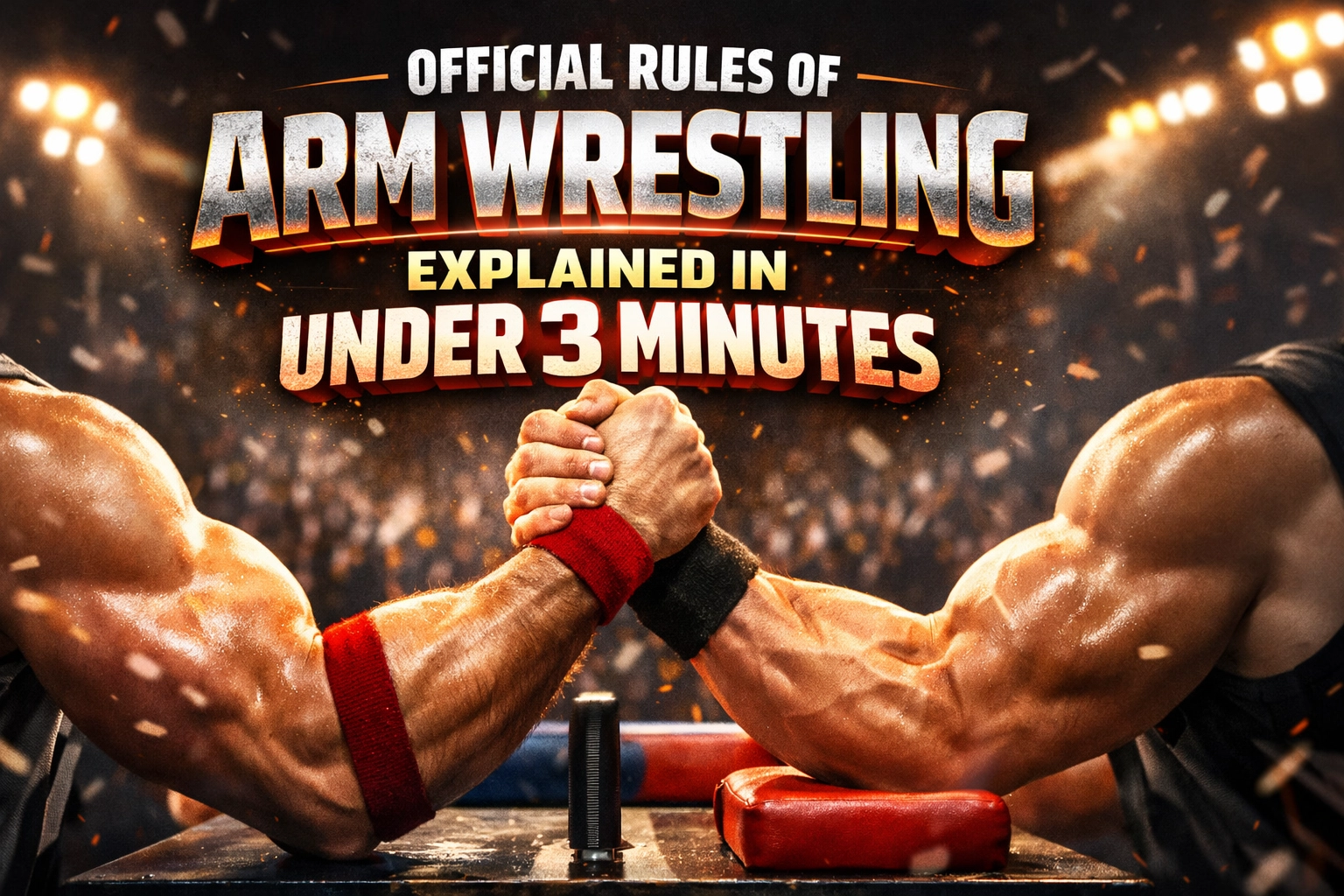
Before you even start pulling, there's a whole process to make sure the match is fair. Both competitors sit at the table with their elbow planted firmly on the elbow pad. Your shoulders need to be square to the table, no weird angles trying to get an advantage before the ref says "GO."
Here's what you need to lock in:
- One foot on the floor at all times (no standing up mid-match like you're lifting weights)
- Your non-competing hand grips a peg on the side of the table
- Elbow stays on the pad: lift it and you're getting a warning or worse
The referee centers both competitors' hands palm-to-palm with thumb knuckles visible and level. Your wrists must stay straight when you close your grip. No pre-bending allowed.

The Grip: You've Got 60 Seconds
This is where strategy comes into play. You and your opponent get 60 seconds to negotiate your grip before the ref starts the match. That might sound like plenty of time, but when you're trying to get the perfect hand position against someone who knows what they're doing, it goes fast.
The referee makes sure both hands are properly aligned, knuckles are visible, and everything's centered. Once everyone's satisfied (or time runs out), the ref will call out commands to start the match.
How to Win: The Pin Explained
In professional arm wrestling, winning is simple: pin your opponent's hand to the touch pad.
A pin happens when any part of your opponent's hand: from wrist to fingertips: touches or goes below the touch pad on their side of the table. It's not about slamming their hand down with brute force from above. The official rules of arm wrestling require you to apply pressure sideways toward the pin pad.
Pulling your opponent's arm toward the center of the table? Not allowed. That's a foul. You're competing to rotate and pin their hand to their side, not yank them across the table.
Major Fouls You Need to Avoid
Professional arm wrestling has strict rules about what you can and can't do. Break these and you're either getting warned, losing a round, or getting disqualified entirely.
Straight Arm Position: If your arm goes completely straight during the match, the ref stops it immediately. This is considered dangerous and gives an unfair mechanical advantage.
Wrist Bending: Your wrist needs to stay neutral. Flexing it forward or rotating it is a violation. The arm wrestling rules are clear on this: wrist positioning can make or break a match.
False Start: Any hand, wrist, or arm movement after the ref says "Close your hands" but before "GO" counts as a false start. Jump the gun and you're getting called out.
Touching Your Body: You can't touch your chin, shoulder, or head to your competing hand during the match. Keep it clean.
Dangerous Position: If you end up in a position the ref deems unsafe, you've got 2 seconds to correct it. Don't fix it? That's a foul.

Referee Involvement: Who's Watching?
Most professional matches have 1-2 referees managing the action. The head referee controls the match, calls fouls, and makes final decisions. In high-level competitions, a second referee may assist to catch infractions from different angles.
The ref's job is to:
- Ensure proper grip setup
- Start the match with clear commands
- Watch for fouls during competition
- Call the pin when it happens
- Keep competitors safe
At ARMSportsTV, we follow professional standards with trained referees who know the official rules of arm wrestling inside and out. When you're watching our events, you're seeing the sport done right.
What You Can't Wear
Arm wrestling has specific equipment restrictions to keep things fair and prevent injuries:
- No wrist wraps or straps on your competing arm
- No elbow bandages
- No rings or jewelry on your competing hand
- No protective cups (not that kind of sport)
Basically, if it gives you extra support or could hurt your opponent, leave it in your gym bag.

Match Format: Best of Three
In championship rounds and finals, matches are typically best-of-three. Win two rounds and you take the match.
Between rounds, competitors get up to 60 seconds of rest. That might not sound like much, but when your forearm feels like it's going to explode, every second counts.
Left hand vs. right hand matches are also common in tournaments. Just because you dominated with your right doesn't mean you're safe: some competitors are ambidextrous monsters.
The Commands You'll Hear
Every official arm wrestling match follows the same verbal cadence from the referee:
- "Set your grip" – Time to negotiate hand position
- "Close your hands" – Lock in your grip, no more adjustments
- "Ready? GO!" – Match is live
Between "Close your hands" and "GO," you need to stay completely still. Any movement is a false start.
Why Rules Matter
You might be thinking, "It's just arm wrestling: does all this really matter?"
Absolutely. The official rules of arm wrestling exist to:
- Keep competitors safe from injury
- Make matches fair regardless of size or strength differences
- Create a legitimate sport instead of bar-room chaos
- Allow consistent judging across tournaments worldwide
When you watch matches on ARMSportsTV, you're seeing athletes who've trained for years, understand these rules, and use them strategically. The difference between amateur and professional arm wrestling isn't just strength: it's technique, positioning, and knowing how to work within the rules.
Final Thoughts
The arm wrestling rules might seem complicated at first, but they're designed to create fair, exciting competition. Once you understand the basics: proper setup, the 60-second grip window, sideways pressure for the pin, and what not to do: you'll watch matches completely differently.
Whether you're thinking about competing yourself or just want to appreciate the sport at a higher level, knowing these official rules makes every match more interesting.
Ready to see these rules in action? Check out professional matches and catch the best arm wrestling content at ARMSportsTV, where we showcase top-tier competition with proper officiating and world-class athletes.
Now you know the rules. Time to watch (or compete) like a pro.
Sorry, the comment form is closed at this time.