02 Jul Professional Arm Wrestling 101: A Beginner’s Guide to Mastering the Table
So, you think you’ve got what it takes to step up to the table? Maybe you’ve dominated your buddies at the local bar, or perhaps you’ve been binge-watching highlights of legends like John Brzenk and Devon Larratt. But let’s get one thing straight: professional arm wrestling is a world away from a casual "over-the-counter" scrap. It’s a high-octane blend of explosive power, chess-like strategy, and technical precision.
At ARMSportsTV, we live and breathe this sport. We don't just host tournaments; we produce world-class arm sports entertainment that brings the grit and glory of the table to venues across America. Whether you’re an aspiring athlete looking for an arm wrestling tournament near me or a venue owner wanting to host the next big arm wrestling events, this guide is your entry point into the elite world of professional pulling.
1. The Arena: Understanding the Professional Setup
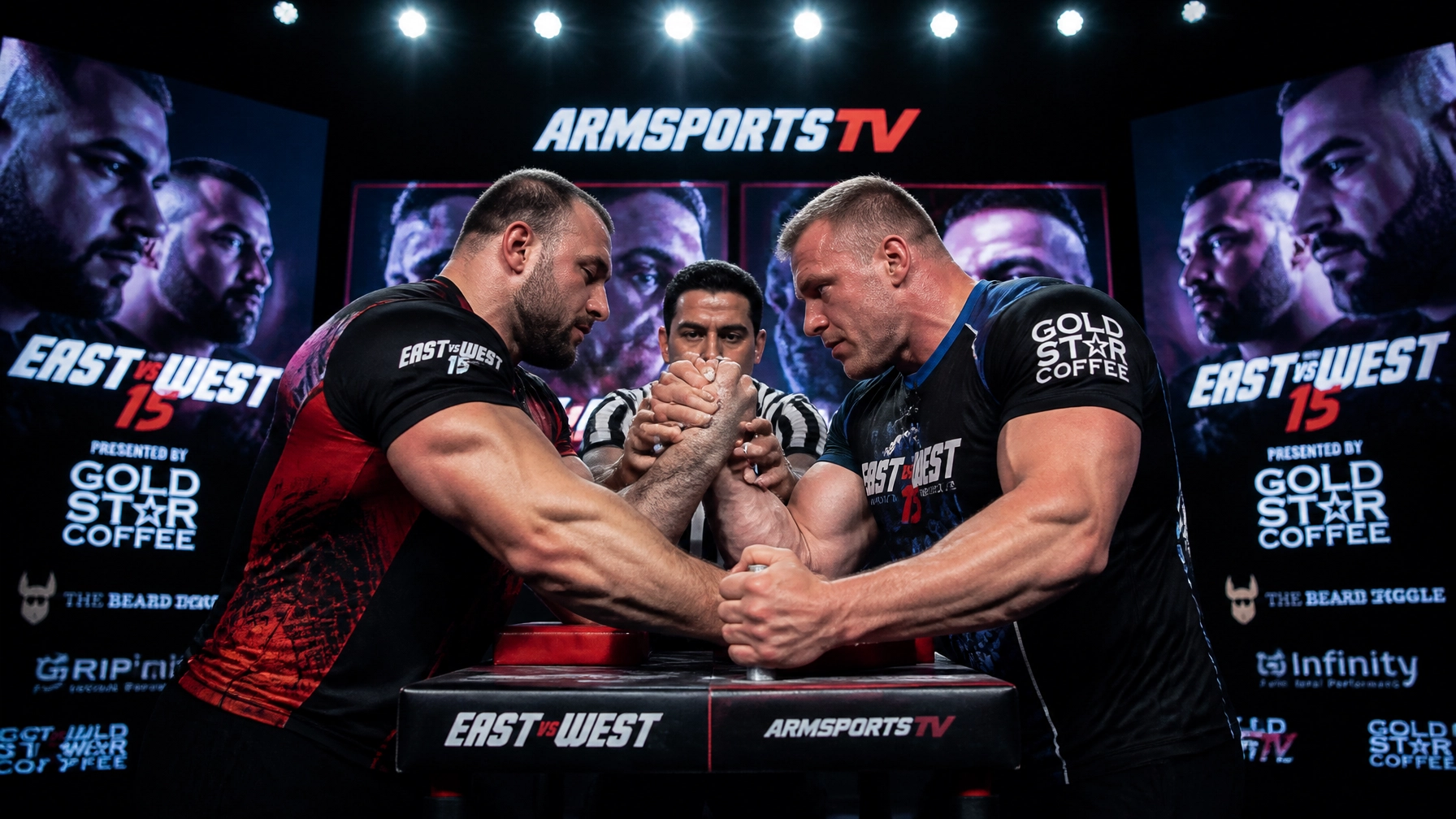
Before you even touch hands, you need to understand the terrain. A professional arm wrestling table isn't just a piece of furniture; it’s a precision-engineered battleground.
- The Table: Standing 40 inches high, it features two elbow pads, two pin pads, and two hand pegs.
- The Elbow Pads: These are your anchors. If your elbow leaves this pad during the heat of battle, you’re looking at a foul.
- The Hand Pegs: Your non-pulling hand must maintain contact with the peg at all times. This provides the leverage and stability needed to generate massive force without toppling the table.
- The Pin Pads: Your goal is to force your opponent's hand or wrist to touch this pad. In the pros, a "pin" doesn't necessarily mean the back of the hand hits the pad: touching any part of the wrist or hand to the pad (or breaking the plane of the pin line) counts.
At ARMSportsTV, we maintain strict refereeing standards. Every table is manned by a professional official to ensure that every "Go" is fair and every pin is clean.
2. The Official Rules of Arm Wrestling: Staying Legal

If you want to survive a professional arm wrestling match, you need to play by the book. The official rules of arm wrestling are designed for two things: fairness and safety. Here’s what you need to know before the referee shouts "Ready… Go!"
The 60-Second Grip Rule
In the pros, we don’t have all day. When your name is called, you have 60 seconds to reach the table. Once there, you and your opponent have exactly 60 seconds to find a grip you both agree on. If you’re stalling or trying to "cheat" the grip by manipulating your hand height, the referee will take control.
The Referee’s Grip
If 60 seconds pass and no grip is established, the official will step in for a Referee’s Grip. This is the ultimate equalizer. The ref will physically set your hands: straightening wrists, aligning knuckles, and ensuring thumb visibility. Once the ref says "Don't move," you’re locked in. Any movement before the start results in a warning or a foul.
Fouls and Warnings
Two warnings equal one foul, and two fouls equal a loss. Common fouls include:
- Elbow Fouls: Lifting your elbow off the pad or sliding it off the side.
- Early Starts: Moving before the referee says "Go."
- Shoulder Crossing: You cannot cross the center line of the table with your shoulder.
- Body Contact: You cannot touch your competing hand to your own shoulder or chest for leverage.
3. Technical Mastery: Hook vs. Toproll
Arm wrestling isn't just about "pulling down." It's about hand control. There are three primary styles used in arm wrestling events today.
The Toproll (The Outside Move)

The Toproll is arguably the most popular professional technique. It’s a "hand-dominant" move where you use leverage to attack your opponent’s fingers and thumb. By pulling back (back pressure) and rolling your wrist outward (pronation), you essentially "peel" their hand open. Once their wrist is broken, they lose their power, and the pin becomes a formality.
The Hook (The Inside Move)

The Hook is a battle of raw power and bicep strength. Instead of attacking the hand, you "cup" your wrist inward and turn your palm toward your body. This brings the match "inside," where it becomes a test of who has the stronger arm and chest pressure. If you have massive biceps and a thick wrist, the hook is your best friend.
The Press
The Press is often the finishing move. Once you’ve gained hand control via a Toproll or Hook, you "commit" your shoulder behind your hand and drive straight down into the pin pad using your triceps and body weight. It’s explosive, aggressive, and highly effective for ending a match quickly.
4. Tournament Formats: The Road to the Podium

When you enter an ARMSportsTV tournament, you aren't just pulling one match and going home. We specialize in the double elimination tournament format.
Double Elimination: The Grinder
In a double elimination bracket, you aren't out until you lose twice.
- The Winners’ Bracket (A-Side): Everyone starts here. If you keep winning, you stay on this side. It’s the shortest path to the finals.
- The Losers’ Bracket (B-Side): If you lose once, you drop here. You can still win the entire tournament, but you’ll have to pull many more matches to claw your way back to the top. This is where champions are forged in fire and endurance.
The Arm Wrestling Super Match
For high-stakes rivalries, we host arm wrestling super matches. Unlike a tournament bracket, a Super Match is usually a "Best of 5" or "Best of 6" series between two elite athletes. This format eliminates the "lucky pin" factor and proves who is truly the superior puller over multiple rounds.
5. Training Like a Pro: Beyond the Table

You can't just lift standard weights and expect to dominate arm sports. Professional pullers use specialized training to target the tiny muscles in the hand and forearm that others ignore.
- Cupping (Wrist Flexion): Use heavy wrist curls or a "wrist roller" to build the strength needed for a Hook.
- Pronation: This is the most critical "pro" lift. Using a belt or strap looped over your thumb, you practice the rotation needed to execute a Toproll.
- Rise: Training your "radial deviation" (the ability to keep your knuckles high) prevents your opponent from pushing your hand down.
- Static Holds: Arm wrestling is largely isometric. Practicing "holds" at specific angles on the table: or using a heavy cable machine: builds the "locking" strength needed to stop a faster opponent.
Remember: Safety first. Never train with a completely straight arm, and always keep your "nose to your hand" to avoid dangerous rotational forces on your humerus.
6. Join the Movement: Host or Compete
At ARMSportsTV, we are the bridge between the athletes and the fans. We bring professional-grade TV production and media support to every event, turning a simple tournament into a massive arm sports entertainment spectacle.
- For Athletes: We cater to competitors 18 and older. Our events are organized, professionally refereed, and designed to give you the spotlight you deserve. Check our website for upcoming dates.
- For Venues: Want to pack your house on a Tuesday or Saturday night? Arm wrestling brings a high-energy, competitive crowd that is unlike any other sport. We handle the tables, the rules, the referees, and the media. You just provide the space and the fans.
Conclusion
Professional arm wrestling is a sport of inches, seconds, and sheer will. From mastering the arm wrestling rules to perfecting your double elimination tournament strategy, there is always something new to learn.
Are you ready to test your grip? Keep an eye out for the next ARMSportsTV event and come see what the buzz is about. Whether you're pulling or cheering, there's no better place to experience the roar of the crowd and the snap of the "Ready… Go!"
Stay strong. Stay legal. See you at the table.
Sorry, the comment form is closed at this time.