15 Aug Professional Arm Wrestling: The Rules, Format & Training That Power America’s Fastest-Growing Sport
Professional arm wrestling is no longer a barroom challenge: it is high-intensity competition, live sports entertainment, and a powerful opportunity for venues, cities, sponsors, and media partners.
With clearly defined rules, trained referees, structured tournament brackets, and broadcast-quality production, arm wrestling can deliver the energy of a major sporting event without the infrastructure demands of a full-size arena. That is why more communities are searching for arm wrestling events, athletes are looking for a serious arm wrestling tournament near me, and venue owners are seeking new ways to attract audiences.
ARMSportsTV brings the complete package: professional arm wrestling events, tournament management, officials, media production, sponsorship activation, and turnkey support for hosts across America.
What Is Professional Arm Wrestling?
Professional arm wrestling is a regulated strength sport built around technique, leverage, timing, and explosive power. Athletes compete at a standardized table while attempting to drive an opponent’s hand to the pin pad.
The sport combines:
- High-level athletic performance
- Weight classes and left- or right-arm divisions
- Formal refereeing
- Double elimination tournament structures
- Supermatch cards
- Live commentary and broadcast production
- Sponsorship and entertainment opportunities
Arm sports have the advantage of being instantly understandable. Fans can see the objective, feel the tension, and follow the action within seconds. With the right presentation, a local competition can become a professional arm sports entertainment property with ticket sales, sponsorship inventory, concessions, merchandise, livestreams, and media rights.
Official Rules of Arm Wrestling
Rule sets can vary by federation, promotion, and event. Organizers should always publish the governing rules before registration. ARMSportsTV maintains its own professional event standards, available on the ARMSportsTV Rules and Regulations page.
Athlete eligibility
ARMSportsTV competitions are designed for competitors aged 18 and older. Athletes may be required to complete registration, waivers, weigh-ins, and category verification before competing.
Depending on the event, divisions may be separated by:
- Weight class
- Right arm or left arm
- Men’s or women’s divisions
- Professional, amateur, or open categories
- Special exhibition or supermatch status
Regulation table setup
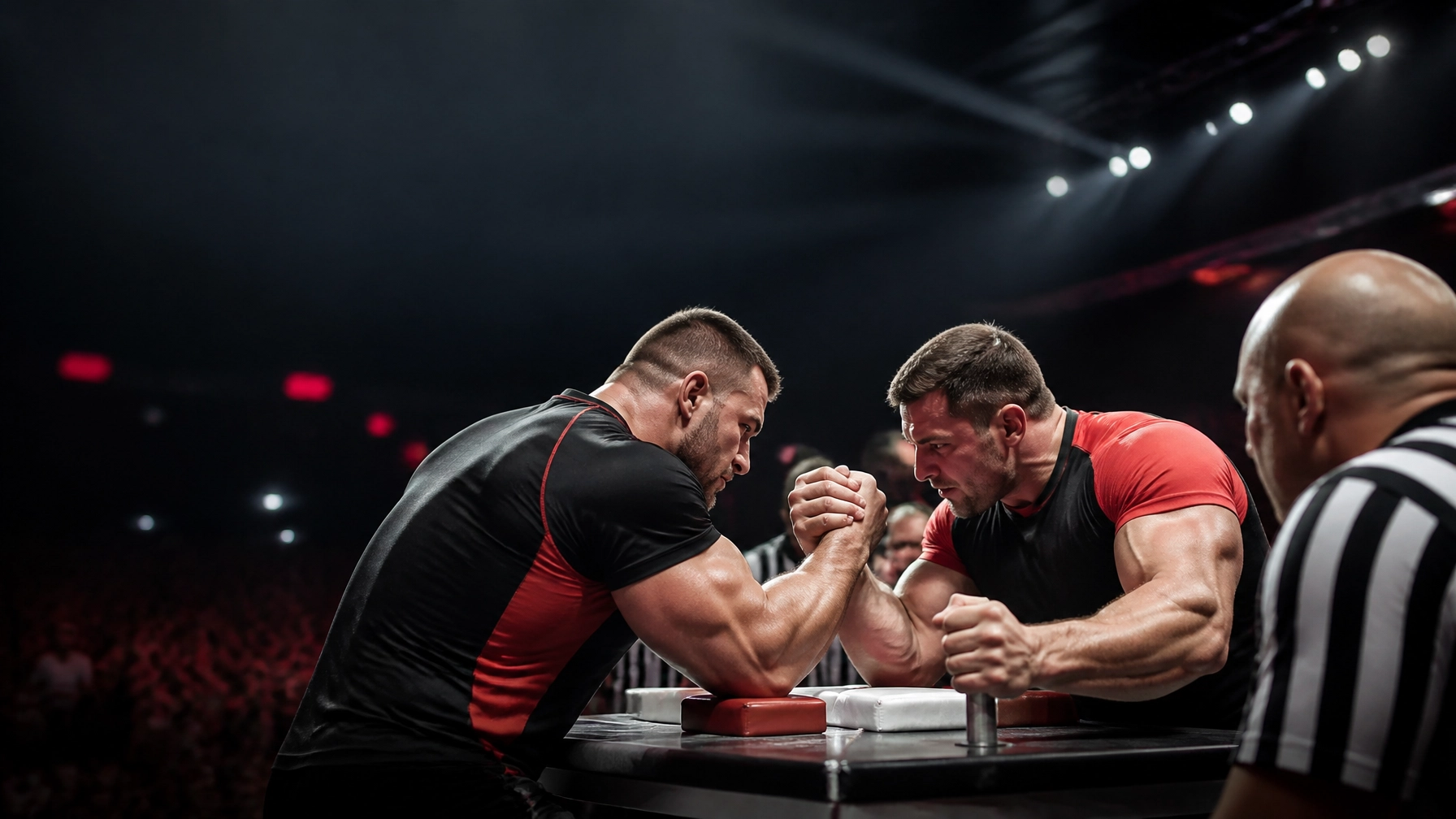
A professional arm wrestling table is built for stability, visibility, and referee access. Common specifications include:
- Standing table height: approximately 40 inches
- Seated table height: approximately 28 inches
- Tabletop: approximately 36 inches wide by 26 inches deep
- Elbow pads: approximately 7 by 7 inches
- Angled pin pads positioned on both sides
- Vertical hand pegs for the non-competing hand
- A clearly marked centerline
The table is not just equipment: it is the playing field, camera focal point, and centerpiece of the live event.

Starting position
Before the referee starts the match, competitors generally must:
- Place the competing elbow on the elbow pad
- Keep the non-competing hand in contact with the peg
- Square the shoulders to the table
- Center the grip
- Keep the wrists in a legal position
- Show the thumb knuckles when required
- Avoid contact between the competing hand and the body
- Respond to referee commands
ARMSportsTV allows 60 seconds total for a competitor to report to the table and attempt to establish a grip. Failure to appear within the allotted time can result in a loss.
If athletes cannot agree on a fair grip, the referee may establish a referee’s grip. Once the referee begins setting the hands, movement can result in a warning or foul depending on the governing rules.
The “Ready…Go” command
The match begins only when the head referee gives the official start command, commonly “Ready…Go.”
False starts, hand movement, premature pressure, or failure to follow referee instructions can lead to penalties. Competitors should never stop pulling until the referee calls “Stop” and signals the winner.
How a pin is scored
A pin occurs when the opponent’s natural wrist line, hand, or fingers touch or pass below the pin pad on the legal winning side of the table.
The referee must be able to clearly see the pin. In professional productions, additional cameras can help capture close finishes, elbow movement, and controversial calls for review.
Common fouls
Although penalty systems vary, common arm wrestling fouls include:
- Lifting the elbow completely off the pad
- Allowing the elbow to slide beyond the pad
- Losing contact with the hand peg
- Moving before the start command
- Covering the opponent’s thumb knuckle during setup
- Touching the competing hand to the chin, shoulder, or body
- Crossing the shoulder over the centerline
- Entering a dangerous shoulder position
- Intentionally slipping the grip
- Intentionally causing an opponent to foul
- Poor sportsmanship or abuse toward officials
A clean slip may result in the use of a strap. An intentional slip, particularly from a losing position, can be penalized as a foul or loss.
Referee Standards That Protect the Competition
Professional arm wrestling depends on visible, consistent officiating. A referee is responsible for more than calling the pin. The referee controls the setup, monitors safety, manages fouls, applies straps, communicates rest periods, and confirms the result.
ARMSportsTV events use:
- A minimum of one referee per standard competition table
- A minimum of two referees per table for ARMSportsTV Super Match Events
- Clearly defined hand signals and verbal commands
- Professional table management
- Consistent enforcement of grip, elbow, shoulder, and pin rules
For larger productions, camera-assisted review and replay can add transparency while creating compelling broadcast content.
Officials who want to build a career in the sport can pursue training and certification. Properly trained referees improve athlete confidence, reduce disputes, and help venues deliver a more credible event.
Understanding the Double Elimination Tournament Format
Most ARMSportsTV tournaments use a double elimination tournament format, except for designated supermatches.
The structure is simple:
- All competitors begin in the winners bracket.
- A first loss moves an athlete to the losers bracket.
- A second loss eliminates the athlete from that division.
- The final competitors advance toward the championship match.
This format rewards consistency while giving athletes a chance to recover from one early mistake. It also creates compelling storylines: undefeated favorites, comeback runs, surprise upsets, and last-chance battles in the losers bracket.
A professional arm wrestling tournament may be organized by weight class, arm side, and competition level. Brackets can be managed manually for smaller events or through tournament software for larger productions.
Arm Wrestling Super Match vs. Tournament Competition
An arm wrestling super match features one head-to-head pairing rather than a large bracket. Supermatches are ideal for:
- Main-event programming
- Rivalries and grudge matches
- Title defenses
- Celebrity or influencer events
- Pay-per-view and streaming content
- Sponsor-focused presentations
A supermatch may use a best-of-five or best-of-seven format, depending on the promotion. Each round gives the audience another dramatic moment, while athlete introductions, interviews, commentary, walkouts, and instant replays turn the match into a complete entertainment property.

How Professional Arm Wrestlers Train
Winning requires more than a strong biceps. Elite athletes develop hand control, wrist strength, back pressure, side pressure, endurance, and technical awareness.
Key training priorities
- Wrist and hand strength: Cupping, extension, pronation, and supination
- Forearm development: Grip endurance and wrist stability
- Back and shoulder strength: Posting, pulling, and maintaining position
- Biceps and brachialis: Arm control during hooks and defensive positions
- Core and lower-body stability: Creating force without losing balance
- Table technique: Practicing starts, straps, referee grips, and transitions
Athletes commonly develop styles such as the top roll, hook, press, and posting game. The best training programs combine progressive resistance work with frequent table practice against opponents with different hand sizes, strengths, and techniques.
Train for longevity
Arm wrestling places significant demands on tendons, elbows, wrists, and shoulders. Athletes should increase training loads gradually, warm up thoroughly, strengthen opposing muscle groups, and learn to recognize dangerous positions.
A qualified coach can help an athlete develop a training schedule that includes strength phases, technical practice, conditioning, recovery, and competition preparation.

Gear Guide for Competitors
The right gear improves performance, safety, and compliance.
Essential competition gear
- Regulation arm wrestling table
- Approved straps
- Chalk or permitted grip aid
- Athletic shirt or sleeveless competition top
- Sports pants
- Athletic shoes
- Hair restraints when necessary
- Approved riser platform for height compensation
Wrist wraps, elbow supports, jewelry, and other accessories may be restricted on the competing arm. Always review the specific event regulations before arriving.
For hosts, equipment should also include cleaning supplies, first-aid materials, spare straps, signage, score sheets, tables for registration, and secure storage for athlete and event equipment.
How to Host Arm Wrestling Events at Your Venue
A successful event begins with more than an available room. The venue must support competition flow, audience visibility, production access, and athlete safety.
Important planning considerations include:
- Clear space for competition tables and warm-up areas
- Seating with unobstructed views
- Athlete staging and call-up areas
- Controlled registration and weigh-in space
- Adequate lighting and power for production
- Camera positions and cable management
- A professional announcer or MC
- Medical and emergency procedures
- Sponsor signage and branded activation zones
- Parking, concessions, and guest services
The business opportunity extends beyond ticket sales. A well-produced event can generate revenue through:
- Local and regional sponsorships
- VIP tickets and hospitality packages
- Vendor booths
- Merchandise
- Food and beverage sales
- Livestream access
- Broadcast and media rights
- Athlete seminars and clinics
- Tourism partnerships
- City and destination marketing

Why Choose ARMSportsTV?
ARMSportsTV is not simply a tournament organizer. We deliver the competition, production, and commercial strategy required to make professional arm wrestling work for athletes, fans, and host partners.
Our solutions include:
- Full-service event hosting
- Venue and city activation
- Local consulting and coaching
- Turnkey “event in a box” licensing
- Multi-tier sponsorship activation
- TV and livestream production
- Media rights packaging
- Official and referee training
- Tournament operations and bracket management
For venue owners and event planners, that means less guesswork and a faster path to a polished, revenue-producing event. For cities, it means bringing a distinctive sporting experience that can attract visitors and create local economic activity. For athletes, it means competing in an environment built around professional standards.
If you are searching for an arm wrestling tournament near me, looking to bring arm wrestling events to your community, or ready to create a new arm sports entertainment property, ARMSportsTV can help you build the right format.
Bring Professional Arm Wrestling to Your Market
The demand for live, accessible, high-energy sports entertainment continues to grow. Professional arm wrestling gives audiences a competition they understand immediately: and gives hosts multiple ways to generate revenue before, during, and after the event.
Contact ARMSportsTV to book an event, explore a turnkey package, add full TV production, or discuss sponsorship and media rights opportunities.
Venue owners can also review the official ARMSportsTV event rules and contact the team about hosting, consulting, licensing, or enrolling local officials in certification training.
Sorry, the comment form is closed at this time.